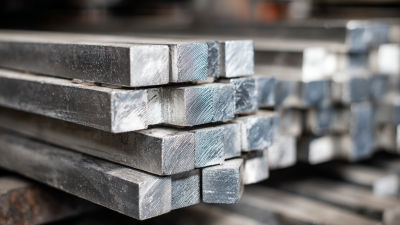
The 6061 Aluminum Bar is truly a versatile material that's found its way into so many different industries around the world. It’s well-loved for being strong yet lightweight, which explains why so many engineers and manufacturers prefer it. Big names like Boeing and Tesla, for example, use 6061 Aluminum Bar for parts that need to be both tough and light at the same time.
You’ll see this alloy in a bunch of areas — from cars to aerospace projects, it’s pretty much everywhere. Take the automotive world — it’s often used for frame parts and heat exchangers because it resists corrosion and can be easily machined. Plus, welding and fabricating with it is a lot simpler, which opens up all sorts of design possibilities, even complex shapes.
Of course, nothing's perfect. There are some limitations, especially when it comes to extreme temperatures — in those conditions, it might not perform quite as well. So, it's really about understanding your specific needs and working within those limits to get the best out of it. As industries keep evolving, ongoing research and new developments will hopefully unlock even more uses for this handy material in the future.

Overview of 6061 Aluminum Bar and Its Properties
6061 aluminum bar is a versatile material widely used in various industries. It has excellent mechanical properties. Its strength and corrosion resistance make it reliable in diverse applications. The alloy consists mainly of aluminum, magnesium, and silicon, giving it unique characteristics. It is lightweight yet strong, which is advantageous for structural applications.
This aluminum bar exhibits good workability. For example, it can be easily machined, welded, and formed. These properties allow for customization in design. Industries like aerospace and automotive often utilize 6061 aluminum due to its durability. In construction, it provides lightweight support, improving overall efficiency. However, achieving the desired results may require careful fabrication techniques.
Beyond structural uses, 6061 aluminum bar is found in consumer products. Think of bicycle frames or consumer electronics. While these uses showcase its versatility, the production process can sometimes lead to inconsistencies. Factors such as alloy composition can affect performance. Addressing these challenges is essential for engineers and designers to ensure reliability across applications.
Applications of 6061 Aluminum Bar in Construction Industry
6061 aluminum bar is widely used in various construction applications. Its balance of strength, weight, and corrosion resistance makes it ideal for structural components. Beams, columns, and brackets often utilize this alloy. It is versatile enough for both residential and commercial projects.
In addition to structural elements, 6061 aluminum bars serve in tools and fixtures. This includes scaffolding systems that require lightweight, yet sturdy materials. Architects appreciate its ability to resist the elements, ensuring long-term durability. Fabricators find it easy to work with, allowing for custom designs without excessive costs. There are challenges, though. Some may underestimate machining requirements, leading to potential delays. Proper planning is essential to optimize usage and reduce waste.
Safety is another concern. Proper handling and fabrication techniques are necessary to prevent accidents on site. The bar can be functional, yet careful training is essential for those using it. Ultimately, while 6061 aluminum bar shows great promise in construction, awareness of its limitations influences how effectively it can be utilized.
Top 10 Uses for 6061 Aluminum Bar in Global Industries
This chart highlights the diverse applications of 6061 aluminum bar across various industries. The construction industry leads with the highest usage, followed by automotive and aerospace sectors, showcasing the versatility and strength of 6061 aluminum in modern applications.
Use of 6061 Aluminum Bar in Automotive Manufacturing
6061 aluminum bars are widely used in automotive manufacturing due to their excellent strength-to-weight ratio. This makes them ideal for car frames and chassis components. The lightweight nature of 6061 aluminum helps improve fuel efficiency, which is a key concern in modern vehicle design. In addition, this material exhibits good corrosion resistance, enhancing the durability of automotive parts.
Engine components also benefit from 6061 aluminum bars. They can withstand high temperatures while providing reliable performance. However, manufacturers must ensure proper alloy selection and processing to avoid issues like brittleness. Some engineers suggest continuous testing and quality checks to maximize performance.
Another use is in the production of suspension systems. Here, 6061 aluminum is favored for its ability to absorb shocks effectively. However, using this material requires a careful balance between weight and structural integrity. Not all designs may benefit from aluminum, leading to debates on optimal material choices. Overall, the versatility of 6061 aluminum makes it a valuable resource in automotive applications, but ongoing research and development are essential for overcoming its limitations.
Role of 6061 Aluminum Bar in Aerospace Sector
The aerospace sector relies heavily on materials that combine strength and lightness. In this regard, 6061 aluminum bar is a favorite choice. It boasts excellent mechanical properties, making it ideal for aircraft components. This alloy features good corrosion resistance and is weldable, which further enhances its versatility.
Components like fuselage frames, brackets, and support beams often use 6061 aluminum. These parts must endure high stress while remaining lightweight. Manufacturers appreciate the ease of machining that this alloy offers. However, some challenges exist. The alloy can be prone to stress corrosion cracking under certain conditions. Proper handling and treatment are essential to mitigate these risks.
In practice, engineers must consider various factors when using 6061 aluminum in aerospace applications. While its benefits are clear, potential drawbacks cannot be ignored. Continuous testing and innovation are vital. These efforts can help ensure that this aluminum bar remains a trusted choice for the future of aerospace engineering.
Innovative Uses of 6061 Aluminum Bar in Marine Applications
The 6061 aluminum bar is a leading choice in marine applications due to its excellent corrosion resistance and strength-to-weight ratio. This alloy has a magnesium and silicon composition, making it durable yet lightweight, critical for vessels subjected to harsh marine conditions. In fact, according to a 2021 industry report, the demand for aluminum in marine industries is projected to grow by 5% annually.
One innovative use of 6061 aluminum is in the construction of boat hulls and frameworks. Its ability to withstand saltwater exposure significantly extends the lifespan of marine structures. Additionally, the material is often utilized in manufacturing components like engine blocks and other structural parts that require precision and reliability. According to data from the Aluminum Association, over 50% of marine applications now utilize advanced aluminum alloys, reflecting a significant shift towards lightweight materials in the maritime sector.
Despite its advantages, there are areas for improvement. Some manufacturers still face challenges in welding 6061 aluminum due to its sensitivity to heat. The need for skilled welders and specific techniques can complicate production processes. Additionally, the balance between weight savings and structural integrity must be continually assessed. The marine industry must adapt and invest in training to fully realize the potential of this versatile material.
Impact of 6061 Aluminum Bar in Electrical and Electronics Industry
The impact of 6061 aluminum bar in the electrical and electronics industry is profound. This specific alloy is favored for its lightweight properties, making it ideal for various applications. According to a recent market research report, the demand for lightweight materials in electronics is projected to grow by over 6% annually until 2030. As companies seek to improve energy efficiency, aluminum's role becomes critical.
6061 aluminum bar is commonly used in heat sinks, enclosures, and electrical connectors. Its thermal conductivity and corrosion resistance enhance performance. In fact, many manufacturers report a 20% improvement in heat dissipation when using 6061 aluminum in their designs. This alloy also has excellent machinability, which allows for precise components that meet stringent industry standards.
**Tips:** Consider the environmental benefits. Aluminum can be recycled without losing quality. This adds to its appeal in sustainable electronics. Another aspect to review is the machining process. The ease of shaping aluminum into complex geometries can save time and costs. However, remember that aluminum is softer than other metals, which might lead to wear in high-stress applications. Always assess the specific needs of your project.
Advantages of 6061 Aluminum Bar in Medical Equipment Production
The use of 6061 aluminum bar in medical equipment production is gaining traction. Its lightweight nature makes it ideal for portable devices. Surgeons benefit from tools that are easy to handle. Additionally, the corrosion resistance of 6061 aluminum adds to its appeal in sterile environments. Equipment must withstand disinfection processes. This material holds up well, ensuring longevity.
Durability is a major concern in medical manufacturing. 6061 aluminum bar provides strength without adding excessive weight. Users report improved maneuverability during procedures. Customization is possible; manufacturers can create unique shapes for specific needs. However, sourcing high-quality aluminum can be challenging. Variability in material quality may impact performance.
Investing in 6061 aluminum bar may also pose financial risks. While it offers numerous advantages, there is no one-size-fits-all solution. Developing equipment requires careful consideration. Balancing cost with quality is essential for success. As the industry evolves, ongoing research and innovation will help uncover new applications.
FAQS
: Its strength, weight, and corrosion resistance are ideal for structural components like beams and columns.
It is used to construct boat hulls and frameworks, providing durability in harsh saltwater conditions.
It offers lightweight properties, improves heat dissipation, and enhances thermal conductivity in various applications.
Yes, improper machining can lead to delays. Also, welding may require skilled labor and specific techniques.
Safety concerns arise during handling and fabrication. Proper training is essential to prevent accidents on-site.
Yes, aluminum can be recycled without losing quality, adding to its appeal for sustainable practices.
Its softness may lead to wear in high-stress applications, so assess project needs carefully before proceeding.
Yes, it is versatile, fitting both residential and commercial projects, but planning is crucial for optimized use.
The demand for aluminum in marine applications is expected to grow by 5% annually, indicating a trend towards lightweight materials.
Underestimating machining needs can create waste and increase costs, highlighting the importance of careful planning.
Conclusion
The 6061 Aluminum Bar is a versatile material known for its strength, corrosion resistance, and excellent machinability, making it an essential component in various global industries. In the construction sector, it is valued for its lightweight and structural integrity, while the automotive industry utilizes it for parts and components that require durability and performance. In aerospace, the 6061 Aluminum Bar plays a critical role due to its high strength-to-weight ratio, contributing to more efficient aircraft design.
Innovative applications extend to marine environments, where its resistance to corrosion enhances the durability of vessels. Moreover, in the electrical and electronics industry, 6061 Aluminum Bar is used for its conductivity and reliability in components. The medical equipment sector also benefits from this aluminum alloy, as it meets stringent hygiene and strength requirements. Overall, the diverse applications of the 6061 Aluminum Bar underscore its significance in modern manufacturing and technology.