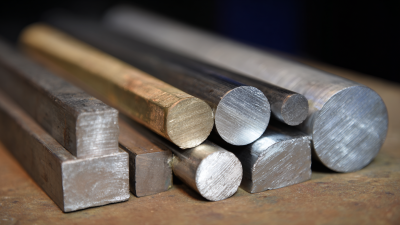
Picking the right aluminum plate for your project can honestly be a bit tricky. With so many options out there, the 2026 Aluminum Plate really catches your eye because of its solid strength and durability. At the same time, it’s worth considering the 2024 Aluminum Plate, which is known for being lightweight and packed with high performance. So, before you jump in, it’s super important to really understand what your project needs.
Things like how thick the plate should be, what alloy type you want, or what kind of finish you’re after—those all play a role in your decision. Every project is unique, so it’s worth taking the time to weigh all these factors. Sometimes, the obvious choice isn’t necessarily the best one. Also, keep in mind how environmental conditions—like moisture or heat—could impact how the aluminum holds up over time.
And hey, talking to the experts can make a big difference. Companies like Aluminum Solutions Inc. have tons of experience and can offer some really helpful advice about their products. Their insights can help you pick the perfect plate for your specific application. Just remember, doing your homework now can save you a lot of headaches later, ensuring that your project lasts longer and performs better. Spotting potential issues early on definitely pays off in the long run.
When selecting 2026 aluminum alloy, it's essential to understand its specific characteristics. This alloy boasts excellent strength-to-weight ratio and good corrosion resistance, making it ideal for aerospace and automotive applications. Its high tensile strength allows designers to create lightweight structures without sacrificing durability. This property is particularly valuable in projects where performance and efficiency are paramount.
However, there are nuances to consider. Machining 2026 aluminum can be challenging due to its hardness. Proper tools and techniques are required to achieve the desired precision. Additionally, while it exhibits good weldability, heat treatment can affect its strength. It's crucial to evaluate your project requirements and confirm whether this alloy meets them effectively.
Moreover, ensure you analyze the alloy's cost versus its benefits. Sometimes, a different aluminum grade may offer a better balance of performance and price. Assessing multiple factors can lead to a more informed decision. Each project has unique demands, so reflect on how 2026 aluminum fits into your specific application. The path to the right choice is often complex and requires careful consideration.
When selecting 2026 aluminum plates for construction projects, understanding their mechanical properties is crucial. These plates offer a unique combination of strength and lightweight characteristics. They are known for excellent fatigue resistance, which is vital in applications subject to cyclic loading. The tensile strength of 2026 aluminum often ranges between 300 and 450 MPa, depending on the temper. This strength makes them suitable for structural applications where durability is key.
Another important aspect is that 2026 aluminum plates exhibit good corrosion resistance. This feature enhances their longevity, especially in harsh environments. However, it’s worth noting that not all grades of 2026 aluminum perform equally. A project may require a specific alloy treatment to optimize performance. In some instances, users may overlook the alloy’s temper, which can significantly affect the plate's performance in real-world applications.
It's essential to reflect on the thickness of the plates as well. Thicker plates may be required for heavy-duty applications, while thinner options can suffice for less demanding tasks. However, a thicker plate may add unnecessary weight. Balancing strength and weight is a challenge that requires careful consideration. Choosing the right specifications ensures that the project meets performance expectations without overspending.
| Property | Value | Significance |
|---|---|---|
| Yield Strength (MPa) | 380 | Indicates the maximum stress that the material can withstand without permanent deformation. |
| Ultimate Tensile Strength (MPa) | 450 | Represents the maximum stress the material can handle before failure. |
| Elongation (% in 50 mm) | 10 | Measures the ductility of the material; larger percentage means better forming ability. |
| Hardness (Brinell) | 105 | Indicates the resistance of the material to local plastic deformation. |
| Density (g/cm³) | 2.75 | Influences the weight of the structure and material costs. |
| Thermal Conductivity (W/m·K) | 120 | Determines how well the material can dissipate heat. |
| Electrical Conductivity (% IACS) | 35 | Indicates the material's ability to conduct electricity. |
When choosing aluminum for a project, understanding the properties of different alloys is critical. 2026 aluminum stands out for its high strength and excellent machinability. Compared to other alloys like 6061 and 7075, it offers unique advantages.
6061 is more common but less strong than 2026. However, it has better corrosion resistance, which might be a deciding factor for some applications.
In contrast, 7075 aluminum, while stronger, is less ductile and harder to weld. This could complicate assembly processes. The choice between these alloys may depend on your project’s specific requirements. Some projects may need the strength of 2026, whereas others may benefit from the ease of working with 6061.
Experts suggest that you consider not only strength but also the environment your project will face. Reflect on how factors like weight and durability play into your decision. It's about achieving the right balance for your needs. Remember, there’s no one-size-fits-all solution in alloy selection. Don't hesitate to reassess your choices as project needs evolve.
When selecting the right thickness and dimensions for a 2026 aluminum plate, it’s crucial to consider the specific requirements of your project. Thickness is vital. Thicker plates provide strength and durability but may be heavier. This can impact ease of handling. Understanding the load and stress the piece will endure helps in making informed decisions.
Dimensions also play a key role. Length and width determine how the plate fits into your design. If the plate is too large, it can be unwieldy. Conversely, a smaller plate might not meet your needs. Always measure carefully to avoid waste.
Don’t overlook the little details. The edges of the aluminum plate can be sharp. This can lead to safety hazards. Consider adding a radius or bevel on the edges for safety. Additionally, think about storage and transportation. Bulky plates require more space and can be cumbersome to transport. Engaging with local suppliers may provide insights on common thickness options available in your area, but always be prepared to make compromises based on your specific needs.
When budgeting for the procurement of 2026 aluminum plates, it’s vital to assess the project's needs. A proper assessment begins with understanding the dimensions and specifications necessary for your specific applications. Are you constructing a lightweight structure or a high-strength assembly? Each requirement influences the quantity needed and, consequently, the overall cost. Pushing for the lowest price may lead to compromises on quality and performance.
Market prices for aluminum can fluctuate. You may notice this variation based on supplier and location. It’s essential to gather quotes from multiple suppliers to get a realistic estimate. Always account for additional costs, such as shipping and handling, when comparing prices. Sometimes, high shipping fees can offset the apparent savings from cheaper materials. Staying informed about market trends can help you anticipate these changes.
Consider the long-term implications of your choice. While it may seem cost-effective now, poor material selection can lead to higher repair costs later. Reflecting on past projects, one might see how small savings initially became large expenditures due to compromises. Investing time to understand the costs better will lead to more sustainable choices. Always keep your project’s long-term success in mind.
When considering the applications of 2026 aluminum plates, both the aerospace and automotive industries stand out. These plates offer unique benefits due to their high strength-to-weight ratio. This is crucial in aerospace, where every ounce matters. Engineers often select 2026 aluminum for aircraft components. It helps reduce energy consumption and improve fuel efficiency.
In the automotive sector, 2026 aluminum plates play a vital role as well. They are used in lightweight vehicle structures. Lighter vehicles enhance performance and reduce emissions. However, sourcing the right grade for a specific application can be tricky. Factors such as alloy composition and heat treatment can affect performance.
It's important to evaluate your project requirements carefully. Consider factors like load-bearing capacity, corrosion resistance, and ease of fabrication. Sometimes, the best choice may not be the most obvious one. Trial and error could lead to better solutions. Testing various aluminum grades can reveal unexpected strengths. In both industries, an informed choice will lead to better outcomes.
When sourcing quality 2026 aluminum plates, begin by understanding your project requirements. Consider the specific applications for which you need the aluminum. Are you focused on strength, lightweight properties, or corrosion resistance? Each project has unique needs that specific plate grades can address. Ensure you have a clear specification in mind before approaching suppliers.
Next, research potential suppliers thoroughly. Look for those with a solid reputation in the industry. Seek out customer reviews that reflect their experience with quality and service. It's important to communicate openly with suppliers about your quality expectations. Ask about their sourcing practices and certification standards, as these contribute to the overall reliability of your material.
Be aware that not all suppliers may meet your standards. Some might push lower-quality products for cost savings. Don’t hesitate to request samples for testing. This step can expose inconsistencies before placing larger orders. Keep an open line for feedback throughout the sourcing process. This proactive approach can save time and resources.
The innovative application of 2024 T4/T351 aluminum alloy plates in kitchenware design is revolutionizing cooking and culinary experiences. Renowned for their exceptional strength-to-weight ratio, these aluminum alloys are ideal for creating durable and lightweight kitchen tools and appliances. The T4 temper boasts enhanced corrosion resistance and improved machinability, making it suitable for items that require precision and reliability. Reports indicate that the demand for metals in kitchenware is on the rise, with forecasts suggesting a compound annual growth rate of over 5% in the next decade, primarily driven by advances in materials technology and consumer preference for high-performance cooking equipment.
In terms of thickness, the versatile range of 0.3mm to 300mm allows designers to tailor products according to specific functional requirements. Thin plates can be utilized for items like spatulas and measuring cups, while thicker plates are perfect for robust cookware such as frying pans and baking sheets. Industry studies show that incorporating aluminum alloys not only enhances the functionality of kitchenware but also contributes to aesthetic appeal with modern, sleek designs. The ability to efficiently dissipate heat while remaining lightweight makes these materials indispensable for both amateur cooks and professional chefs alike.
The 2024 T4/T351 aluminum alloy plates are not just functional but also environmentally friendly, enhancing sustainability in kitchenware products. The recyclability of aluminum ensures a reduced ecological footprint, catering to the increasing consumer demand for environmentally responsible products. As the kitchenware market continues to evolve, the integration of custom-cut aluminum alloys will undoubtedly play a key role in shaping future culinary innovations.
: 2026 aluminum boasts high strength and excellent machinability. It often outperforms many other alloys in these aspects.
6061 is more common and offers better corrosion resistance. However, it's generally weaker than 2026 aluminum.
While 7075 is stronger than 2026, it is less ductile and harder to weld, complicating assembly processes.
Consider strength, weight, and environment. The right balance differs for each project and may change over time.
Thickness impacts strength and durability. Thicker plates are stronger but may be heavier and harder to handle.
Proper dimensions ensure the plate fits your design. Large plates can be unwieldy, while small ones may not suffice.
Sharp edges can pose safety hazards. Adding a radius can improve safety for users handling the plates.
Local suppliers can offer insights into common thickness options available, but be prepared for compromises.
The article "How to Choose the Right 2026 Aluminum Plate for Your Project?" provides a comprehensive guide on the key aspects to consider when selecting 2026 aluminum plates for various applications. It starts with an overview of the characteristics of the 2026 aluminum alloy, highlighting its mechanical properties that make it suitable for construction and manufacturing. A comparative analysis against other aluminum alloys, including the widely used 2024 aluminum plate, emphasizes the distinctions in performance and suitability for specific projects.
In addition, the article discusses the importance of selecting the appropriate thickness and dimensions for the aluminum plates, along with budgeting considerations for procurement. It also explores the applications in the aerospace and automotive industries while offering tips for sourcing high-quality plates from suppliers. By understanding these elements, readers can make informed decisions that align with their project requirements, ensuring the successful implementation of 2026 aluminum plates in their work.